

7 Days
ITINERARY
DAY 01 – KANDY

At the airport, you will meet our representative.
We pick you up from the Airport and heading to Kandy via Pinnawela and Visit the Elephant orphanage on your way.
This orphanage was set up by the government to take care of baby elephants lost or abandoned in the wild. Witness the feeding of the elephants. Thereafter observe them as they take their daily bath in the river nearby, which affords marvellous photo opportunities. Bath time is enjoyed by all elephants, young and old alike and it is a good time to closely observe their tightly knit family structure.
Daily feeding times – 9.15 am, 1.15 pm, and 5.00 pm. bathing times – 10.00 am, 2.00 pm, and 4.00 pm.
DAY 02 – KANDY


After breakfast visit the ROYAL BOTANICAL GARDEN of Peradeniya which was a pleasure garden of a Kandyan King of the 16th Century, later made it in to a Botanical Garden during the British regime. This garden; one of the best in Asia, is a place of beauty and a popular haunt for bird watchers. It is bounded on three sides by the Mahaweli River, which snakes around the 60-hectare gardens. Peradeniya is the second largest botanical garden in Asia. It has an orchid house which botanists should visit. In 1905 an avenue of palms were planted and now is one of the most photographed places in the garden. The oldest tree here is a 150 year old double coconut tree. The Giant Fig tree on the Great Lawn is another notable tree. During World War II, it served as a base for Lord Mountebatten. Today it is a popular haunt for day trippers, botanists and birdwatchers.
Wile we are in the Hill country capital Kandy, which is the last stronghold of Sinhala Kings and is now a UNESCO World Heritage Site. Early evening witness a cultural dance performance. Then visit the Temple of the Sacred Tooth Relic.
DAY 03 – NUWARAELIYA


Ramboda Falls is 109 m (358 ft) high and 11th highest waterfall in Sri Lanka and 729th highest waterfall in the world. It is situated in Pussellawa area, on the A5 highway at Ramboda Pass. It formed by Panna Oya which is a tributary of Kothmale Oya.
Mackwoods is a historical tea factory covering over 27,000 acres of tea and rubber plantations. It was originally founded by Captain William Mackwood in 1841 during the inception of tea estates in Sri Lanka; and is the second oldest mercantile firm of the country. The company remained with the Mackwoods family until 1956
Nuwara Eliya
Often referred to as ‘Little England’, this genteel highland community does have a rose-tinted, vaguely British-country-village feel to it, with its colonial-era bungalows, Tudor-style hotels, well-tended hedgerows and pretty gardens. Indeed, Nuwara Eliya was once was the favoured cool-climate escape for the hard-working and hard-drinking English and Scottish pioneers of Sri Lanka’s tea industry.
DAY 04 – ELLA
The Horton Plains plateau comes to a sudden end at World’s End, a stunning escarpment that plunges 880m. The walk here is 4km, but the trail then loops back to Baker’s Falls (2km) and continues back to the entrance (another 3.5km). The 9.5km round trip takes a leisurely three hours. Unless you get there early, the view from World’s End is often obscured by mist, particularly during the rainy season from April to September. All you can expect to see from World’s End after around 9am is a swirling white wall. The early morning (between 6am and 10am) is the best time to visit, before the clouds roll in. That’s when you’ll spy toy-town, tea-plantation villages in the valley below, and an unencumbered view south towards the coast.
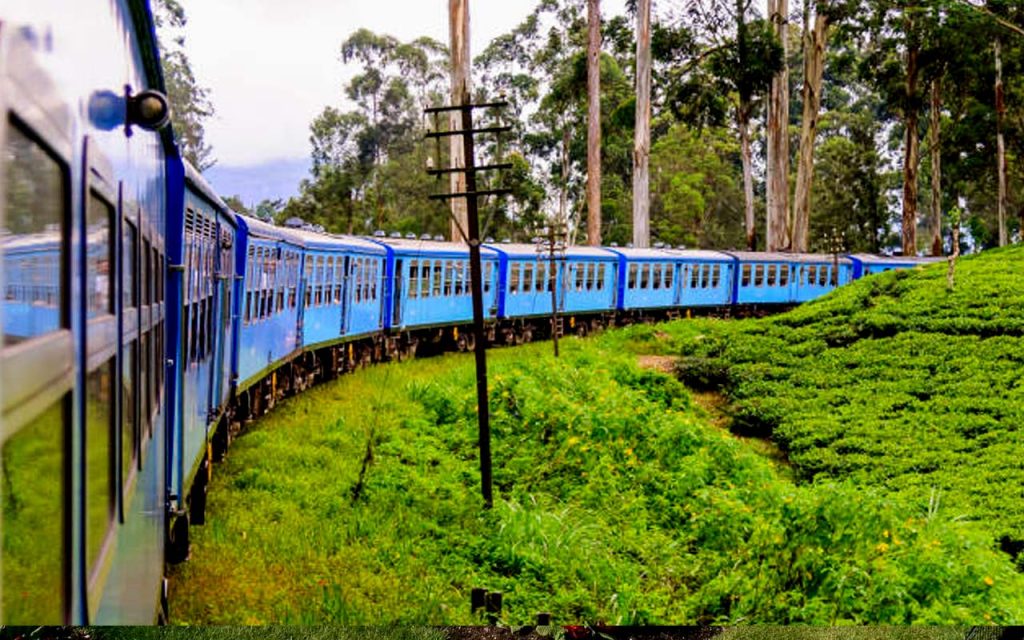
In the early afternoon Train journey from Nanu Oya to Ella.
DAY 05 – YALA


Ella is everyone’s favorite hill-country village, and the place to ease off the travel accelerator with a few leisurely days resting in some of the country’s best guesthouses. The views through Ella Gap are stunning, and on a clear night you can even spy the subtle glow of the Great Basses lighthouse on Sri Lanka’s south coast.
The Nine Arches Bridge also called The Bridge in the sky, is one of the most iconic bridges in Sri Lanka and is one of the best examples of British railway constructions when Ceylon was yet a colony of the British Empire. It is located in Demodara, between Ella and Demodara railway stations. As of the past decade the surrounding area has seen a steady increase of tourism due to the bridge’s architectural ingenuity and the profuse greenery in the nearby hillsides.It is often likened to the countryside through which the fictional Hogwarts express passes through in the Harry Potter world.
Ravana waterfalls is at Ella. Ravana falls is very high waterfalls and a lot of legend stories are hidden at this waterfalls. Ravana waterfalls is at between Ella and Wallawaya. There are 5km to Ravana waterfalls from Ella town.
Yala National Park. This is leopard country, and they are the Lords of the Jungle! With a leopard density that’s higher than anywhere else on this planet, these menacing predators prowl majestically in Yala, while elephants roam in their numbers with cautious deer scampering by their side, This will take place in the evening safari jeep will be pick you up from the hotel at 2pm for the safari.
DAY 06 – MIRISSA


After early breakfast you are heading to Whale and dolphin watching in Mirissa is one of the most exciting water activities you can do in Sri Lanka during your holiday.
In warm Indian ocean you can see Blue whales, Bryde´s whales, Sperm whales, Fin whales, sometimes Killer whales, and Common dolphins, Bottlenose dolphins, Spinner dolphins, Risso’s dolphins and Striped dolphins. Sometimes you can see turtles and various fish species, for example Bluefin tuna and flying fish. Whale watching season starts in November and ends in April. Ocean is warm and calm during these months. boat leaves from Mirissa harbor at 7:00 o´clock in the morning. You should be in the harbor at 6:30-6:45am.
The duration of the tour is 3-5 hours (depends on spotting of whales and wish of our passengers). Afternoons is the ocean usually rough and not suitable for whale watching.
Galle City Tour etc
Galle was known as Gimhathiththa (although Ibn Batuta in the 14th century refers to it as Qali before the arrival of the Portuguese in the 16th century, when it was the main port on the island. Galle reached the height of its development in the 18th century, during the Dutch colonial period. Galle is the best example of a fortified city built by the Portuguese in South and Southeast Asia, showing the interaction between Portuguese architectural styles and native traditions. The city was extensively fortified by the Dutch during the 17th century from 1649 onwards. The Galle fort is a world heritage site and is the largest remaining fortress in Asia built by European occupiers.
DAY 07 – AIRPORT

Stay night in Colombo or Negombo then you’ll be heading to departure
