
Jaffna is the capital city of the Northern Province of Sri Lanka. It is the administrative headquarters of the Jaffna District located on a peninsula of the same name. With a population of 88,138 in 2012, Jaffna is Sri Lanka's 12th most populous city. Jaffna is approximately six miles (9.7 kilometres) from Kandarodai which served as an emporium in the Jaffna peninsula from classical antiquity. Jaffna's suburb Nallur, served as the capital of the four-century-long medieval Jaffna Kingdom.
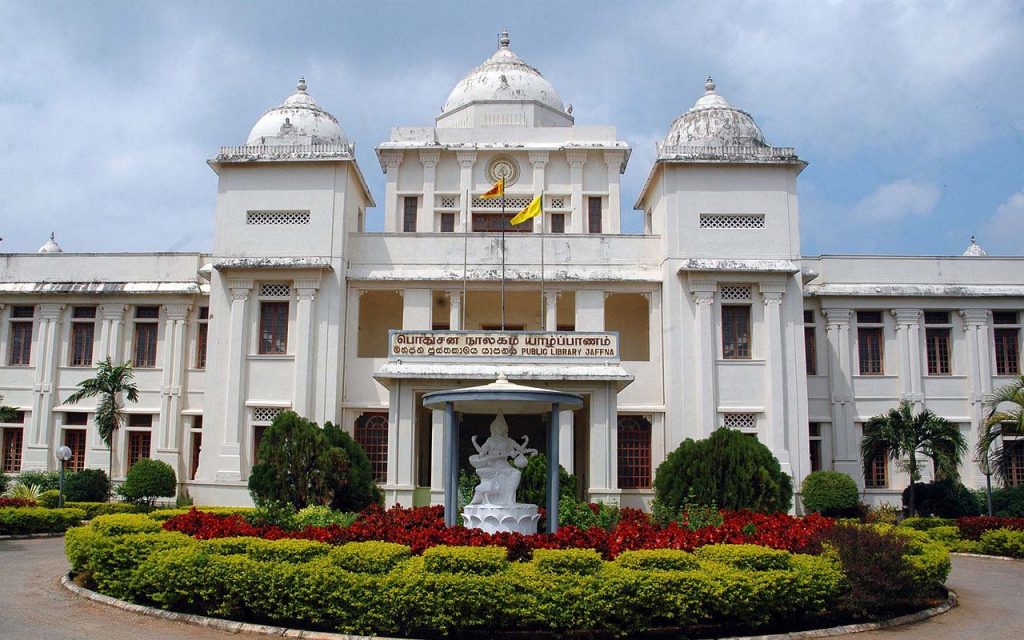
Jaffna Public Library is located in Jaffna, Sri Lanka. It is one of Jaffna's most notable landmarks, and is run by the Jaffna Municipal Council. The library was built in 1933 and burnt in 1981. During the early 1980s, it was one of the biggest libraries in Asia, containing over 97,000 books and manuscripts. Over a million books burned in the 1981 arson attack. Some ancient Sinhala and Tamil books were never recovered. In 2001, rehabilitation of the library was completed, with new structures being built and new books received, although its old books and manuscripts were not replaced. It is Sri Lanka's second main public Library, only rivalled by Colombo Public Library

Nallur Kandaswamy Kovil is a significant Hindu temple, located in Nallur, Northern Province, Sri Lanka.The presiding deity is Lord Murugan in the form of the holy 'Vel' in the Sanctum, the primary shrine, and in other forms, namely, Shanmugar, Muthukumaraswami, Valli Kaanthar with consorts Valli and Deivayanai, and Thandayuthapani, sans consorts in secondary shrines in the temple.
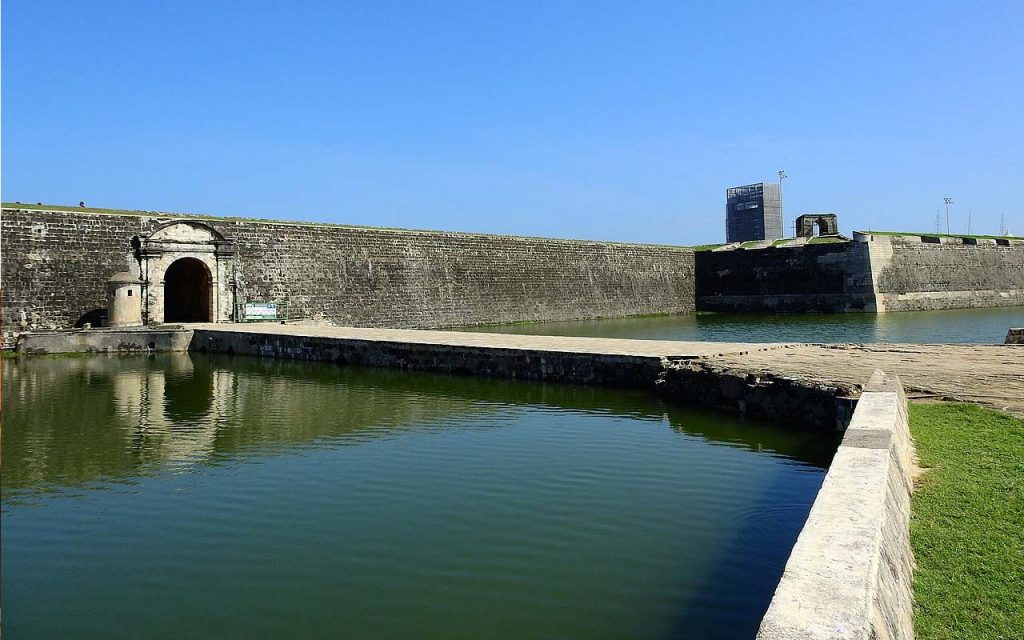
Jaffna Fort is a fort built by the Portuguese at Jaffna, Sri Lanka in 1618 under Phillippe de Oliveira following the Portuguese invasion of Jaffna. The fort is located near the coastal village of Gurunagar. Due to numerous miracles attributed to the statue of Virgin Mary in the church nearby, the fort was named as Fortress of Our Lady of Miracles of Jafanapatão (Fortaleza de Nossa Senhora dos Milagres de Jafanapatão). It was captured by the Dutch under Rijcklof van Goens in 1658 who expanded it.
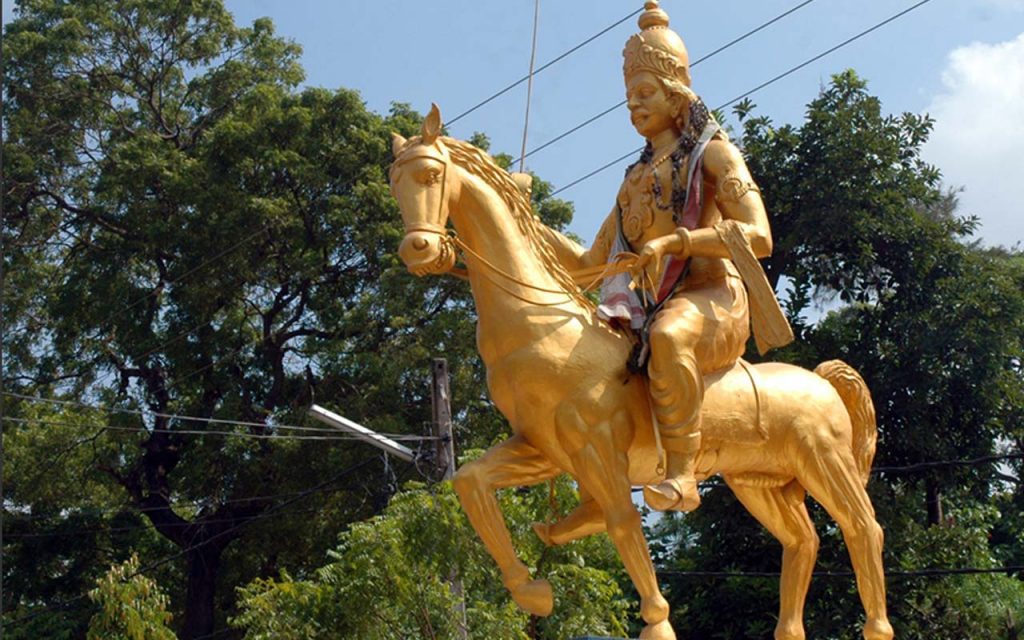
The Sangiliyan statue was dedicated to Cankili II, a Tamil martyr and the last king of Jaffna Kingdom. The statue is seen as a landmark of the city of Jaffna. The Sangiliyan statue was built 1974 at Muthirai junction Nallur and declared open by then Jaffna Mayor Alfred Duraiappah. On 2011 was the statue removed and a new statue was built at the same place. The new statue was declared open by Jaffna Mayor Mrs. Yogeshwarai Patkunarajah and Minister Douglas Devananda. Tamil groups believe the statue was destroyed and rebuilt because of political motives. They criticize by this act was the historic beauty of the statue destroyed, the new statue has not the heroic features of the former statue, the sword in the hand of Cankili was removed by the government and reinstalled in another position.
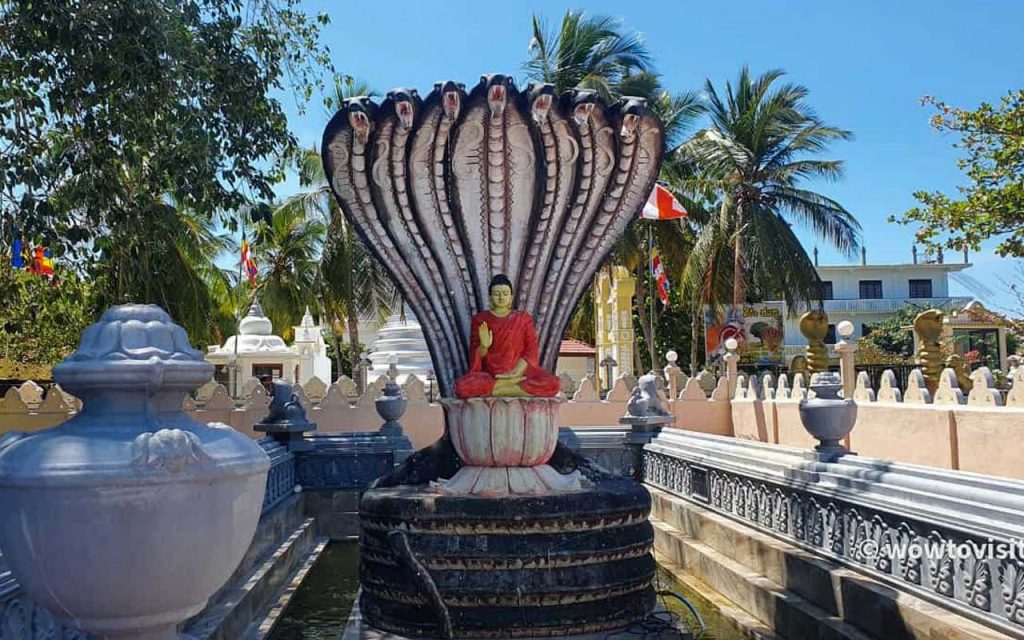
Nagadeepa Purana Vihara is an ancient Buddhist temple situated in Jaffna district of Northern Province, Sri Lanka. It is among the country's sixteen holiest Buddhist shrines (Solosmasthana). According to contemporary history, the Gautama Buddha visited the site after five years of attaining Enlightenment to settle the dispute between two warring Naga kings, Chulodara and Mahodara.
 Ancient history according to the Mahavamsa chronicles and the Tamil Buddhist epic Manimekalai mentions a gem-studded throne and a stone with the Buddha’s footprint at the island Nainativu, (also known as Nagadeepa) which pilgrims from India visited