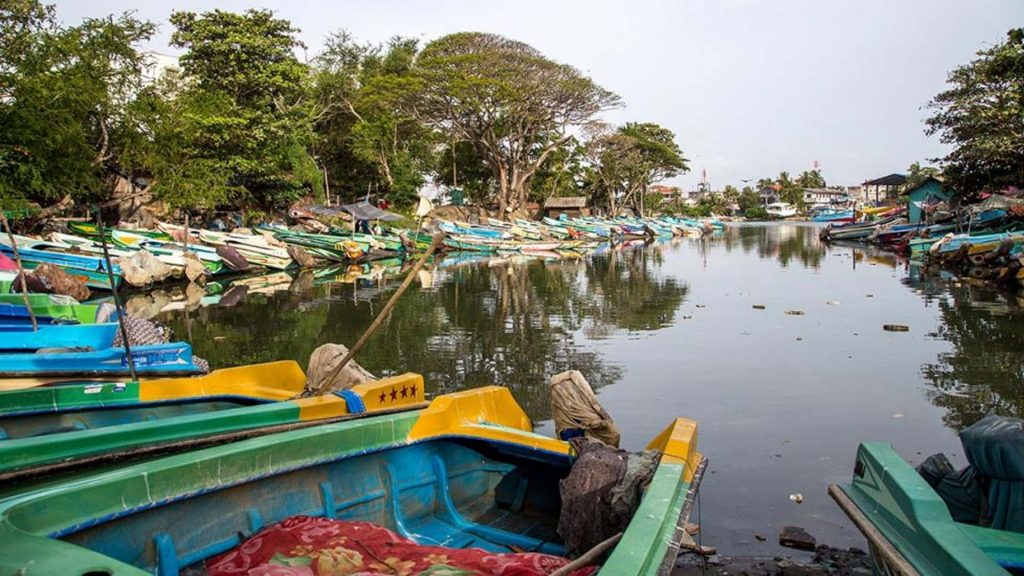
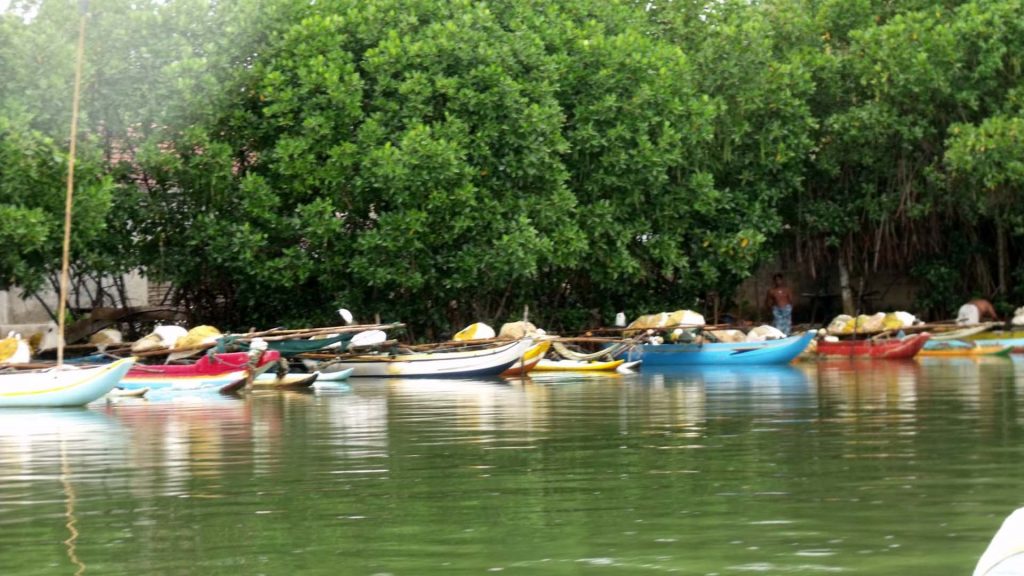
Negombo Lagoon is large semi-enclosed coastal water body with plenty of natural resources. The lagoon is fed by number of small rivers and the Dutch canal. It is linked to the Indian Ocean by a narrow channel to the north, near Negombo. The lagoon and the marsh land area also support local agriculture and forestry. It has extensive mangrove swamps and attracts a wide variety of water birds. The lagoon supports so many distinct species of flora, fauna and as well as another species of birds and variety of animals. Negombo Lagoon is a major local and tourist attraction primarily for sightseeing and boating tours.
The fishermen who are based at the Negombo lagoon live in shanty thatch palm villages along the water's edge. They rely mainly on their traditional knowledge of the seasons for their livelihood, using outrigger canoes carved out of tree trunks and nylon nets to bring in modest catches from September through April. Their boats are made in two forms – oruvas (a type of sailing canoe) and paruvas (a large, man-powered catamaran fitted with kurlon dividers). In recent years, the villagers have supplemented the income earned from fishing by collecting 'toddy', or palm sap, which is used to brew arrack